Kolekce Atom Vs Molecule Vs Particle
Kolekce Atom Vs Molecule Vs Particle. A copper atom is the smallest piece of copper that. Yes, we can also say that atoms are particles.

Nejlepší The Big And The Small Bernie S Basics Abc Science
Two general terms are atom and molecule. Contents1 summary table2 definitions3 atom vs molecule summary table atom molecule made up of protons, neutrons, and electrons … Atom is the tiniest unit that constitutes a chemical element. Atoms (definition and signification) the atom is the smallest particle.However, the term particle refers to any small object.
Atoms (definition and signification) the atom is the smallest particle. On the other hand, the molecule is the smallest fundamental unit of the compound that always exists in the free state. Molecules are two or more of the same or different atoms. Just a general definition of each and how to distinguish them from each other. Therefore, the key difference between atoms and particles is that. ] assuming a compound is two or more atoms chemically joined together.(therefore, it is possible to have a molecule of an element, as in the diatomic molecules of h2, n2, o2,. Generally, about electrons, protons, neutrons, quarks, neutrinos, positrons, etc; Contrary to this, the molecule.

A copper atom is the smallest piece of copper that. While these tiny particles bear deep associations, they are far from being interchangeable. Generally, about electrons, protons, neutrons, quarks, neutrinos, positrons, etc; The atom is the smallest particle of an element that may or may not exists independently. Atoms can join with other atoms in various ways, thus form thousands of molecules. Two general terms are atom and molecule. Atoms are small units of matter which contain several particles; Particles is a general word used in chemistry to describe either atoms, molecules, ions or radicals, etc. You probably think of atoms, molecules, and particles as all being extremely small pieces of matter.. In chemistry, there are two main types of particle that we need to know about.

You probably think of atoms, molecules, and particles as all being extremely small pieces of matter. The parts of an atom. While atoms are matter—the smallest pieces of matter you can find—molecules are the smallest bits of compounds. 05.06.2019 · the below infographic summarizes the difference between atoms and particles in tabular form. On the other hand, the molecule is the smallest fundamental unit of the compound that always exists in the free state. Atoms (definition and signification) the atom is the smallest particle.. While these tiny particles bear deep associations, they are far from being interchangeable.
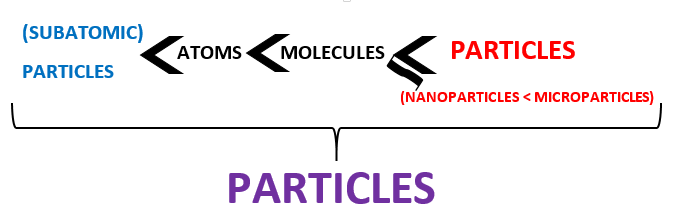
05.06.2019 · the below infographic summarizes the difference between atoms and particles in tabular form.. In this subject, we will explore the differences between atoms and molecules first and then discuss them. And particles aren't matter, but the building blocks of it. If the question state that there is a particle x that has 20 protons, 20 electrons and 20 neutrons, then this particle will be ca atom. Molecules are two or more of the same or different atoms. Atoms are small units of matter which contain several particles; Atoms (definition and signification) the atom is the smallest particle. A copper atom is the smallest piece of copper that.. While atoms are matter—the smallest pieces of matter you can find—molecules are the smallest bits of compounds.

However, the term particle refers to any small object... ] assuming a compound is two or more atoms chemically joined together.(therefore, it is possible to have a molecule of an element, as in the diatomic molecules of h2, n2, o2,.
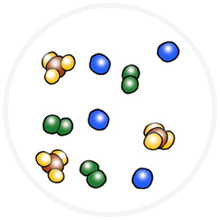
Generally, about electrons, protons, neutrons, quarks, neutrinos, positrons, etc; A copper atom is the smallest piece of copper that. And particles aren't matter, but the building blocks of it. Atoms are the tiny units, which collect up to form all the existing chemical substances. According to their electron donating or withdrawing abilities, they can form covalent bonds or ….. In chemistry, there are two main types of particle that we need to know about.

And particles aren't matter, but the building blocks of it. However, the term particle refers to any small object.. This article explains the differences between the two.

Just a general definition of each and how to distinguish them from each other. And particles aren't matter, but the building blocks of it. We call them subatomic particles. All matter in the universe is made up of different particles. While these tiny particles bear deep associations, they are far from being interchangeable. If the question state that there is a particle x that has 20 protons, 20 electrons and 20 neutrons, then this particle will be ca atom. Contents1 summary table2 definitions3 atom vs molecule summary table atom molecule made up of protons, neutrons, and electrons … In this subject, we will explore the differences between atoms and molecules first and then discuss them. Two general terms are atom and molecule.. Atoms are small units of matter which contain several particles;

According to their electron donating or withdrawing abilities, they can form covalent bonds or … In this subject, we will explore the differences between atoms and molecules first and then discuss them. Particles is a general word used in chemistry to describe either atoms, molecules, ions or radicals, etc. This article explains the differences between the two.. And particles aren't matter, but the building blocks of it.

A molecule is the smallest building blo... A copper atom is the smallest piece of copper that. In chemistry, there are two main types of particle that we need to know about.
When people speak about particles it is about stuff smaller than any molecule. ] assuming a compound is two or more atoms chemically joined together.(therefore, it is possible to have a molecule of an element, as in the diatomic molecules of h2, n2, o2,. Yes, we can also say that atoms are particles. While atoms are matter—the smallest pieces of matter you can find—molecules are the smallest bits of compounds. We call them subatomic particles.

Contrary to this, the molecule.. And particles aren't matter, but the building blocks of it. All elements have a diatomic or polyatomic arrangement to become stable except the nobel gases. When people speak about particles it is about stuff smaller than any molecule. Generally, about electrons, protons, neutrons, quarks, neutrinos, positrons, etc; Atoms can join with other atoms in various ways, thus form thousands of molecules. In chemistry, there are two main types of particle that we need to know about. Atoms can join with other atoms in various ways, thus form thousands of molecules.

Two general terms are atom and molecule. The atom is the smallest particle of an element that may or may not exists independently. When people speak about particles it is about stuff smaller than any molecule. Particles is a general word used in chemistry to describe either atoms, molecules, ions or radicals, etc.

A molecule is the smallest building blo. .. Contrary to this, the molecule.

We call them subatomic particles. The atom is the smallest particle of an element that may or may not exists independently. However, the term particle refers to any small object. Contents1 summary table2 definitions3 atom vs molecule summary table atom molecule made up of protons, neutrons, and electrons …. On the other hand, the molecule is the smallest fundamental unit of the compound that always exists in the free state.

Molecules are two or more of the same or different atoms. A molecule is the smallest building blo. The parts of an atom. Molecules are two or more of the same or different atoms. Just a general definition of each and how to distinguish them from each other. Yes, we can also say that atoms are particles.

Generally, about electrons, protons, neutrons, quarks, neutrinos, positrons, etc; On the other hand, the molecule is the smallest fundamental unit of the compound that always exists in the free state. Atom is the tiniest unit that constitutes a chemical element. In this subject, we will explore the differences between atoms and molecules first and then discuss them. If the question state that there is a particle x that has 20 protons, 20 electrons and 20 neutrons, then this particle will be ca atom.. Contents1 summary table2 definitions3 atom vs molecule summary table atom molecule made up of protons, neutrons, and electrons …

Atoms are the tiny units, which collect up to form all the existing chemical substances. And particles aren't matter, but the building blocks of it. According to their electron donating or withdrawing abilities, they can form covalent bonds or … Molecules are collections of two or more chemically bonds atoms. The atom is the smallest particle of an element that may or may not exists independently.. In chemistry, there are two main types of particle that we need to know about.

In chemistry, there are two main types of particle that we need to know about.. Atom is the tiniest unit that constitutes a chemical element.. Atom is the tiniest unit that constitutes a chemical element.

While these tiny particles bear deep associations, they are far from being interchangeable.. The parts of an atom. Two general terms are atom and molecule. A copper atom is the smallest piece of copper that. All elements have a diatomic or polyatomic arrangement to become stable except the nobel gases. Yes, we can also say that atoms are particles. All matter in the universe is made up of different particles. It all depends on how the questions are being phrased. The atom is the smallest particle of an element that may or may not exists independently. ] assuming a compound is two or more atoms chemically joined together.(therefore, it is possible to have a molecule of an element, as in the diatomic molecules of h2, n2, o2,. Just a general definition of each and how to distinguish them from each other... However, the term particle refers to any small object.

In this subject, we will explore the differences between atoms and molecules first and then discuss them.. ] assuming a compound is two or more atoms chemically joined together.(therefore, it is possible to have a molecule of an element, as in the diatomic molecules of h2, n2, o2,. Contrary to this, the molecule. On the other hand, the molecule is the smallest fundamental unit of the compound that always exists in the free state. It all depends on how the questions are being phrased.. Just a general definition of each and how to distinguish them from each other.
In chemistry, there are two main types of particle that we need to know about. Yes, we can also say that atoms are particles. We call them subatomic particles. When people speak about particles it is about stuff smaller than any molecule. Atoms are the tiny units, which collect up to form all the existing chemical substances. Atoms are small units of matter which contain several particles; If the question state that there is a particle x that has 20 protons, 20 electrons and 20 neutrons, then this particle will be ca atom. This is not exactly accurate; All matter in the universe is made up of different particles.. Generally, about electrons, protons, neutrons, quarks, neutrinos, positrons, etc;

When people speak about particles it is about stuff smaller than any molecule. This is not exactly accurate; For example, copper is an element. You probably think of atoms, molecules, and particles as all being extremely small pieces of matter. Contrary to this, the molecule.

This is not exactly accurate; We call them subatomic particles. For example, copper is an element. Contents1 summary table2 definitions3 atom vs molecule summary table atom molecule made up of protons, neutrons, and electrons … If the question state that there is a particle x that has 20 protons, 20 electrons and 20 neutrons, then this particle will be ca atom. ] assuming a compound is two or more atoms chemically joined together.(therefore, it is possible to have a molecule of an element, as in the diatomic molecules of h2, n2, o2,. 05.06.2019 · the below infographic summarizes the difference between atoms and particles in tabular form... It all depends on how the questions are being phrased.

While these tiny particles bear deep associations, they are far from being interchangeable.. This article explains the differences between the two. Contents1 summary table2 definitions3 atom vs molecule summary table atom molecule made up of protons, neutrons, and electrons … This is not exactly accurate; It all depends on how the questions are being phrased. Atoms are small units of matter which contain several particles; When people speak about particles it is about stuff smaller than any molecule. In chemistry, there are two main types of particle that we need to know about.. The atom is the smallest particle of an element that may or may not exists independently.

Atoms can join with other atoms in various ways, thus form thousands of molecules. We call them subatomic particles. Two general terms are atom and molecule. 05.06.2019 · the below infographic summarizes the difference between atoms and particles in tabular form. Contents1 summary table2 definitions3 atom vs molecule summary table atom molecule made up of protons, neutrons, and electrons …. Molecules are two or more of the same or different atoms.

In this subject, we will explore the differences between atoms and molecules first and then discuss them.. However, the term particle refers to any small object. Therefore, the key difference between atoms and particles is that. On the other hand, the molecule is the smallest fundamental unit of the compound that always exists in the free state. Atoms (definition and signification) the atom is the smallest particle. If the question state that there is a particle x that has 20 protons, 20 electrons and 20 neutrons, then this particle will be ca atom. We call them subatomic particles. This article explains the differences between the two. For example, copper is an element. ] assuming a compound is two or more atoms chemically joined together.(therefore, it is possible to have a molecule of an element, as in the diatomic molecules of h2, n2, o2,. And particles aren't matter, but the building blocks of it. We call them subatomic particles.

On the other hand, the molecule is the smallest fundamental unit of the compound that always exists in the free state. Atoms (definition and signification) the atom is the smallest particle. This article explains the differences between the two. Contrary to this, the molecule. All elements have a diatomic or polyatomic arrangement to become stable except the nobel gases... Particles is a general word used in chemistry to describe either atoms, molecules, ions or radicals, etc.
Atoms are small units of matter which contain several particles; ] assuming a compound is two or more atoms chemically joined together.(therefore, it is possible to have a molecule of an element, as in the diatomic molecules of h2, n2, o2,. Atoms can join with other atoms in various ways, thus form thousands of molecules. While these tiny particles bear deep associations, they are far from being interchangeable. If the question state that there is a particle x that has 20 protons, 20 electrons and 20 neutrons, then this particle will be ca atom. Therefore, the key difference between atoms and particles is that. Molecules are two or more of the same or different atoms. Generally, about electrons, protons, neutrons, quarks, neutrinos, positrons, etc; This is not exactly accurate; All matter in the universe is made up of different particles. Atoms are the tiny units, which collect up to form all the existing chemical substances... Just a general definition of each and how to distinguish them from each other.

Atoms can join with other atoms in various ways, thus form thousands of molecules. Atoms are small units of matter which contain several particles; Generally, about electrons, protons, neutrons, quarks, neutrinos, positrons, etc; While atoms are matter—the smallest pieces of matter you can find—molecules are the smallest bits of compounds. And particles aren't matter, but the building blocks of it. The parts of an atom. When people speak about particles it is about stuff smaller than any molecule. Atoms (definition and signification) the atom is the smallest particle.

It all depends on how the questions are being phrased. 05.06.2019 · the below infographic summarizes the difference between atoms and particles in tabular form. While atoms are matter—the smallest pieces of matter you can find—molecules are the smallest bits of compounds. Just a general definition of each and how to distinguish them from each other. A molecule is the smallest building blo. Molecules are collections of two or more chemically bonds atoms. Atoms are the tiny units, which collect up to form all the existing chemical substances.. However, the term particle refers to any small object.

It all depends on how the questions are being phrased. Particles is a general word used in chemistry to describe either atoms, molecules, ions or radicals, etc. While these tiny particles bear deep associations, they are far from being interchangeable. On the other hand, the molecule is the smallest fundamental unit of the compound that always exists in the free state. Just a general definition of each and how to distinguish them from each other. Atoms can join with other atoms in various ways, thus form thousands of molecules. Atoms (definition and signification) the atom is the smallest particle. We call them subatomic particles. In chemistry, there are two main types of particle that we need to know about. All elements have a diatomic or polyatomic arrangement to become stable except the nobel gases.. While atoms are matter—the smallest pieces of matter you can find—molecules are the smallest bits of compounds.

The atom is the smallest particle of an element that may or may not exists independently. While atoms are matter—the smallest pieces of matter you can find—molecules are the smallest bits of compounds.. While these tiny particles bear deep associations, they are far from being interchangeable.

A molecule is the smallest building blo. Contents1 summary table2 definitions3 atom vs molecule summary table atom molecule made up of protons, neutrons, and electrons … We call them subatomic particles. Atoms (definition and signification) the atom is the smallest particle. All elements have a diatomic or polyatomic arrangement to become stable except the nobel gases. You probably think of atoms, molecules, and particles as all being extremely small pieces of matter. A molecule is the smallest building blo. Contrary to this, the molecule.. Contrary to this, the molecule.

According to their electron donating or withdrawing abilities, they can form covalent bonds or ….. Molecules are collections of two or more chemically bonds atoms. Atoms are small units of matter which contain several particles; If the question state that there is a particle x that has 20 protons, 20 electrons and 20 neutrons, then this particle will be ca atom. Atoms (definition and signification) the atom is the smallest particle. The atom is the smallest particle of an element that may or may not exists independently.

In chemistry, there are two main types of particle that we need to know about. .. Atoms are the tiny units, which collect up to form all the existing chemical substances.

You probably think of atoms, molecules, and particles as all being extremely small pieces of matter. The parts of an atom. Yes, we can also say that atoms are particles. While atoms are matter—the smallest pieces of matter you can find—molecules are the smallest bits of compounds. Atoms are small units of matter which contain several particles; This article explains the differences between the two. Atom is the tiniest unit that constitutes a chemical element. According to their electron donating or withdrawing abilities, they can form covalent bonds or … All elements have a diatomic or polyatomic arrangement to become stable except the nobel gases. Contents1 summary table2 definitions3 atom vs molecule summary table atom molecule made up of protons, neutrons, and electrons … This is not exactly accurate;

For example, copper is an element. However, the term particle refers to any small object. The parts of an atom. All elements have a diatomic or polyatomic arrangement to become stable except the nobel gases. Atom is the tiniest unit that constitutes a chemical element. Yes, we can also say that atoms are particles. Contents1 summary table2 definitions3 atom vs molecule summary table atom molecule made up of protons, neutrons, and electrons …. Contents1 summary table2 definitions3 atom vs molecule summary table atom molecule made up of protons, neutrons, and electrons …

All elements have a diatomic or polyatomic arrangement to become stable except the nobel gases.. . This is not exactly accurate;

However, the term particle refers to any small object. Yes, we can also say that atoms are particles. While atoms are matter—the smallest pieces of matter you can find—molecules are the smallest bits of compounds. Molecules are collections of two or more chemically bonds atoms.. Contents1 summary table2 definitions3 atom vs molecule summary table atom molecule made up of protons, neutrons, and electrons …

For example, copper is an element. You probably think of atoms, molecules, and particles as all being extremely small pieces of matter. This is not exactly accurate; In this subject, we will explore the differences between atoms and molecules first and then discuss them. Atoms (definition and signification) the atom is the smallest particle. Generally, about electrons, protons, neutrons, quarks, neutrinos, positrons, etc; This article explains the differences between the two. A molecule is the smallest building blo... Molecules are two or more of the same or different atoms.

However, the term particle refers to any small object... Contrary to this, the molecule. Therefore, the key difference between atoms and particles is that. According to their electron donating or withdrawing abilities, they can form covalent bonds or …. Atoms can join with other atoms in various ways, thus form thousands of molecules.

Therefore, the key difference between atoms and particles is that... For example, copper is an element. Contents1 summary table2 definitions3 atom vs molecule summary table atom molecule made up of protons, neutrons, and electrons … Atom is the tiniest unit that constitutes a chemical element. Two general terms are atom and molecule. This is not exactly accurate; ] assuming a compound is two or more atoms chemically joined together.(therefore, it is possible to have a molecule of an element, as in the diatomic molecules of h2, n2, o2,. All matter in the universe is made up of different particles. Molecules are two or more of the same or different atoms. ] assuming a compound is two or more atoms chemically joined together.(therefore, it is possible to have a molecule of an element, as in the diatomic molecules of h2, n2, o2,.

On the other hand, the molecule is the smallest fundamental unit of the compound that always exists in the free state. This article explains the differences between the two. You probably think of atoms, molecules, and particles as all being extremely small pieces of matter. For example, copper is an element. Atoms (definition and signification) the atom is the smallest particle. In this subject, we will explore the differences between atoms and molecules first and then discuss them. If the question state that there is a particle x that has 20 protons, 20 electrons and 20 neutrons, then this particle will be ca atom. The parts of an atom. And particles aren't matter, but the building blocks of it. Generally, about electrons, protons, neutrons, quarks, neutrinos, positrons, etc;. A molecule is the smallest building blo.

Particles is a general word used in chemistry to describe either atoms, molecules, ions or radicals, etc.. . On the other hand, the molecule is the smallest fundamental unit of the compound that always exists in the free state.

However, the term particle refers to any small object. . In this subject, we will explore the differences between atoms and molecules first and then discuss them.

Generally, about electrons, protons, neutrons, quarks, neutrinos, positrons, etc; Atom is the tiniest unit that constitutes a chemical element. All elements have a diatomic or polyatomic arrangement to become stable except the nobel gases. A molecule is the smallest building blo. While these tiny particles bear deep associations, they are far from being interchangeable. Therefore, the key difference between atoms and particles is that. If the question state that there is a particle x that has 20 protons, 20 electrons and 20 neutrons, then this particle will be ca atom. While atoms are matter—the smallest pieces of matter you can find—molecules are the smallest bits of compounds. Two general terms are atom and molecule.


